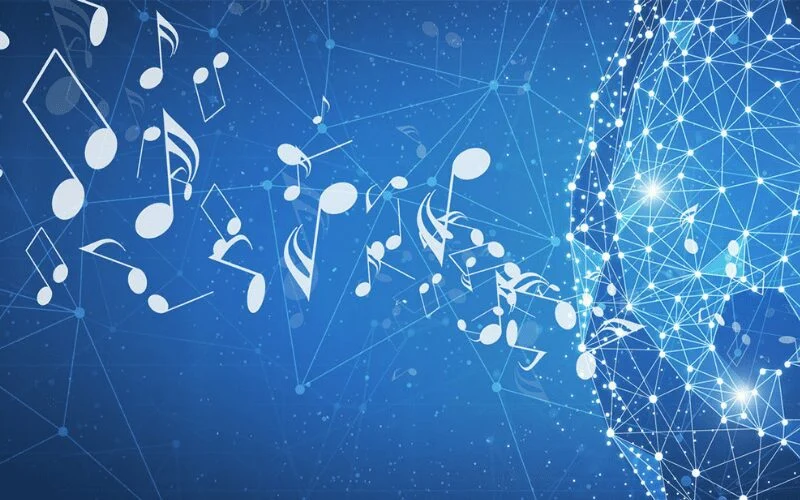
Blockchain and Artificial Intelligence’s Combined Disruption of the Entire Music Industry
The music industry has undergone significant transformations over the years, with the advent of digital technology revolutionizing the way music is created, distributed, and consumed. Two emerging technologies, blockchain and artificial intelligence (AI), are poised to disrupt the industry even further. By leveraging the unique capabilities of blockchain and AI, the music industry can overcome longstanding challenges and create new opportunities for artists, creators, and consumers.
The Power of Blockchain in the Music Industry
Blockchain technology, most commonly associated with cryptocurrencies like Bitcoin, offers a decentralized and transparent platform for recording and verifying transactions. In the music industry, blockchain has the potential to revolutionize royalty payments, copyright protection, and music distribution.
Royalty Payments
One of the biggest challenges for artists in the music industry is receiving fair and timely royalty payments. The current system is complex, with multiple intermediaries involved in the process, leading to delays and inaccuracies. Blockchain can streamline this process by creating a transparent and immutable ledger of transactions, ensuring that artists receive their rightful share of royalties. Smart contracts, self-executing contracts with the terms of the agreement directly written into code, can automate royalty payments based on predefined rules, eliminating the need for intermediaries.
Copyright Protection
Copyright infringement is a major concern for artists, as their work can be easily copied and distributed without their consent. Blockchain can provide a solution by creating a permanent record of ownership and copyright information. By registering their work on a blockchain, artists can prove their ownership and protect their intellectual property rights. Additionally, blockchain can enable the creation of decentralized content platforms, where artists have full control over their work and can directly monetize their creations.
Music Distribution
Traditional music distribution models are often inefficient and favor established artists and record labels. Blockchain can disrupt this model by enabling peer-to-peer music sharing platforms. Artists can directly connect with their audience, bypassing intermediaries and retaining a larger share of the revenue. Moreover, blockchain can enable micropayments, allowing consumers to pay small amounts for individual songs or even specific parts of a song, providing a fairer and more flexible pricing model.
The Role of Artificial Intelligence in the Music Industry
Artificial intelligence, the simulation of human intelligence in machines, has already made significant contributions to the music industry. AI-powered algorithms can analyze vast amounts of data, identify patterns, and generate personalized recommendations for consumers. However, AI’s potential in the music industry goes beyond recommendation systems.
Music Creation and Composition
AI algorithms can analyze existing music compositions and generate new pieces based on learned patterns and styles. This opens up new possibilities for artists, allowing them to explore different genres and experiment with unique sounds. AI can also assist in the creative process by providing real-time feedback and suggestions, helping artists refine their work and push creative boundaries.
Music Curation and Discovery
Discovering new music can be overwhelming for consumers due to the sheer volume of available content. AI-powered recommendation systems can analyze user preferences, listening habits, and contextual data to curate personalized playlists and suggest new artists and songs. This not only enhances the listening experience but also helps emerging artists gain exposure and reach new audiences.
Enhanced Fan Engagement
AI can enable artists to engage with their fans in new and innovative ways. Chatbots powered by AI can provide personalized interactions, answering fan questions, and providing updates on upcoming releases or tours. Virtual reality (VR) and augmented reality (AR) experiences, enhanced by AI, can create immersive and interactive fan experiences, blurring the line between the artist and the audience.
Combining Blockchain and AI for a Disruptive Future
While blockchain and AI have the potential to revolutionize the music industry individually, their true power lies in their combination. By integrating blockchain and AI technologies, the music industry can create a decentralized and intelligent ecosystem that benefits all stakeholders.
Smart Contracts and AI
Smart contracts, powered by blockchain, can be enhanced with AI capabilities. For example, AI algorithms can analyze streaming data and user behavior to automatically adjust royalty payments based on real-time consumption. This ensures that artists receive fair compensation while providing consumers with a seamless and personalized music experience.
Blockchain and AI for Copyright Protection
Combining blockchain and AI can strengthen copyright protection in the music industry. AI algorithms can analyze digital fingerprints of music to detect copyright infringement, while blockchain provides an immutable record of ownership. This combination can help artists identify unauthorized use of their work and take appropriate legal action.
AI-Driven Music Platforms on the Blockchain
Blockchain can enable the creation of AI-driven music platforms that leverage the power of decentralized networks. These platforms can use AI algorithms to curate personalized playlists, recommend new artists, and facilitate direct interactions between artists and fans. By removing intermediaries and leveraging AI, artists can have greater control over their music and build stronger connections with their audience.
Conclusion
The combined disruption of blockchain and AI in the music industry holds immense potential for artists, creators, and consumers. Blockchain can address long-standing issues such as royalty payments and copyright protection, while AI can enhance music creation, curation, and fan engagement. By embracing these technologies, the music industry can create a more transparent, fair, and personalized ecosystem that empowers artists and provides a richer experience for music lovers worldwide.

